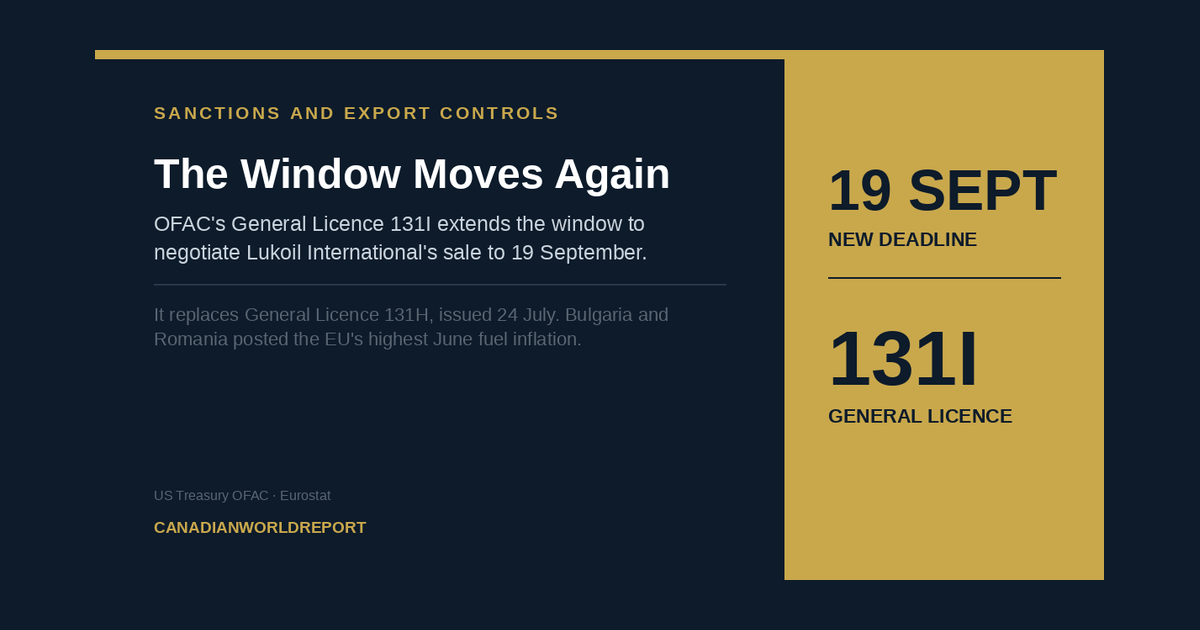
Editorial card. Headline: Sanctions Became Law. The Licence Moved Again. Subhead, quoting the Office of Foreign Assets Control, OFAC may revoke General License 131J at any time. Note: a statute was signed on 18 September 2026 and a sanctions licence was reissued the same day. Sources: OFAC, the U.S. Department of the Treasury and The White House.

Sanctions Became Law. The Lukoil Licence Moved Again.

On 18 September the President signed a bill putting sanctions on Russia into statute. The same day, the Treasury bureau that runs those sanctions replaced the licence that lets buyers negotiate for Lukoil’s refineries and filling stations outside Russia. Set the new licence beside the old one and the paragraphs match. The date is what changed.
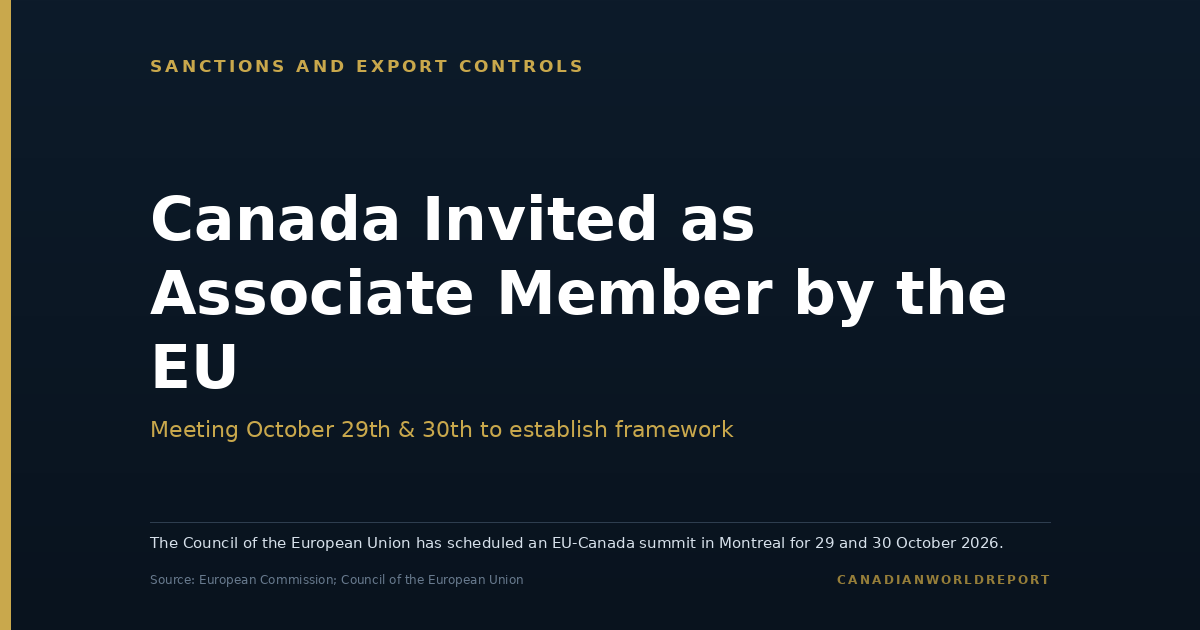
Editorial card reading: Canada Invited as Associate Member by the EU. Subhead: meeting October 29th and 30th to establish framework. Note: the Council of the European Union has scheduled an EU-Canada summit in Montreal for 29 and 30 October 2026. Source: European Commission and Council of the European Union.

Canada Invited as Associate Member by the EU

On 16 September the President of the European Commission told the European Parliament, with Prime Minister Mark Carney sitting in front of her, that she wanted to work on opening the door for Canada to become the first associate member of the European Union. No country has ever held the status and no text defines it. The next step is already in the diary: Canada hosts an EU summit in Montreal on 29 and 30 October.

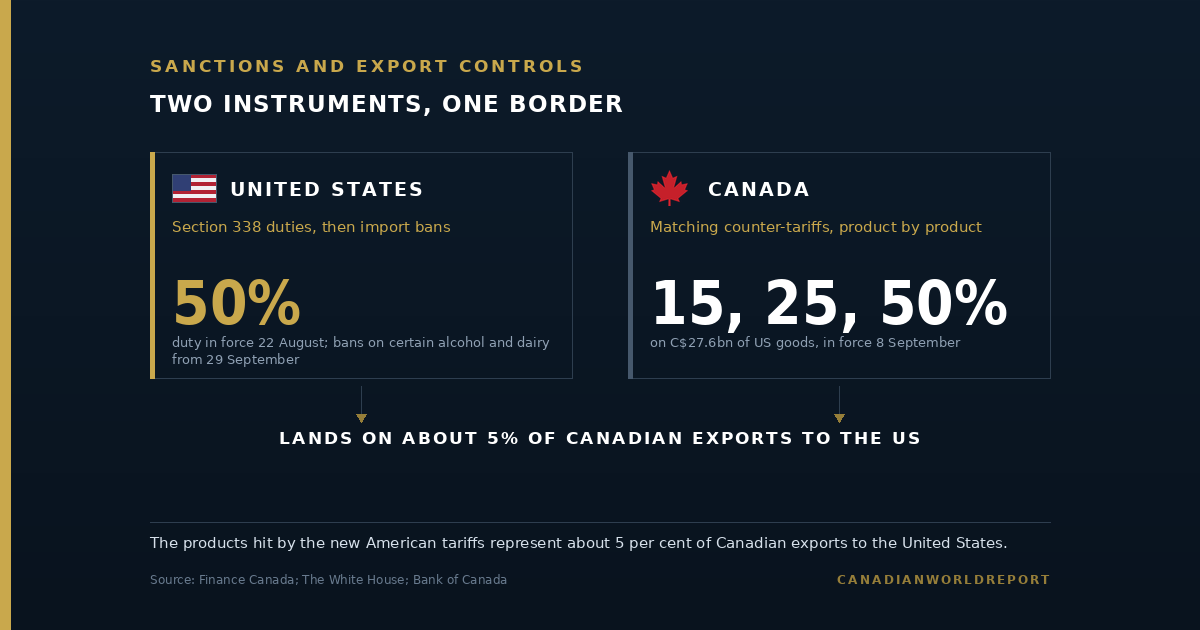
Diagram of the September 8 2026 Canada United States trade measures. The United States is shown using Section 338 duties of 50 per cent in force from 22 August, followed by import bans on certain Canadian alcohol and dairy from 29 September. Canada is shown using matching counter-tariffs of 15, 25 and 50 per cent on 27.6 billion Canadian dollars of United States goods, in force from 8 September. Both land on about 5 per cent of Canadian exports to the United States.

Trade War Escalates to Fever Pitch

On September 8 Canada’s counter-tariffs took effect on $27.6 billion of American goods, matching Washington’s rates product by product. The same day the President signed five proclamations that go past taxing Canadian goods to barring some of them from entering the United States at all. Those import bans start on September 29.

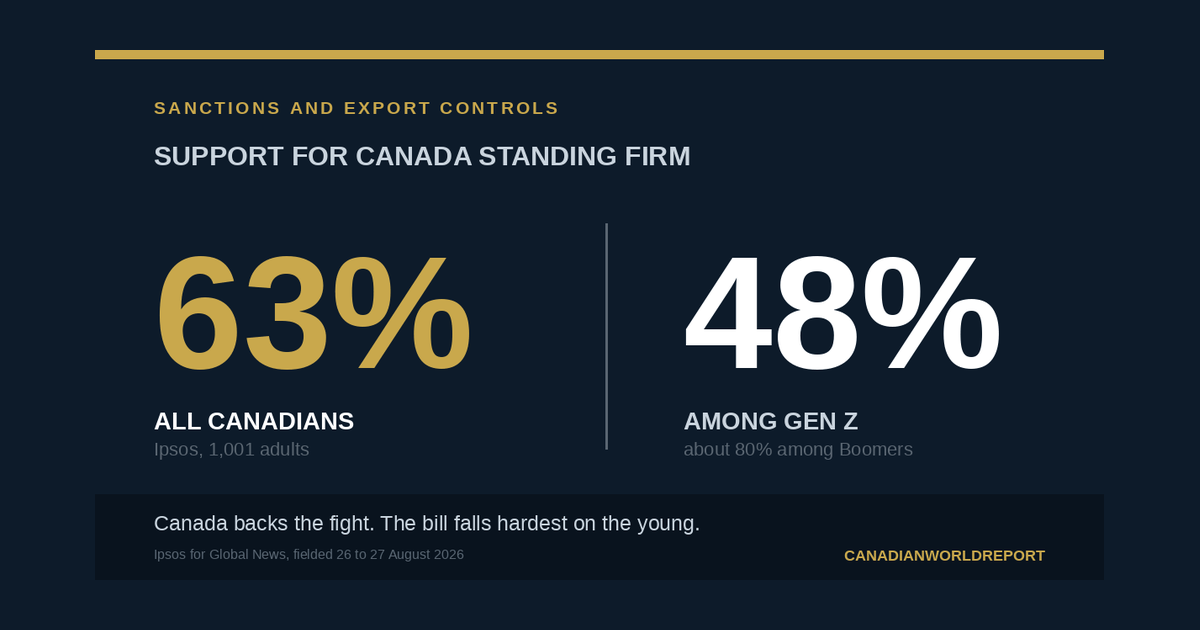
Chart showing 63 per cent of Canadians support standing firm on tariffs, falling to 48 per cent among Gen Z and about 80 per cent among Baby Boomers.

Canada Backs the Fight; the Bill Falls Hardest on the Young

In Youngstown, Ohio, a homebuilder reports three or four planned houses that have not gone ahead this year, and an aluminum fabricator has shelved its expansion into Ontario and Quebec. Across the border, most Canadians back standing firm against U.S. tariffs even if it costs them, but that resolve is not evenly held: it is strongest among older, financially secure Canadians and weakest among the young. Canada’s own counter-tariffs land at one minute past midnight on September 8, the point where that resolve first meets a bill of its own making.

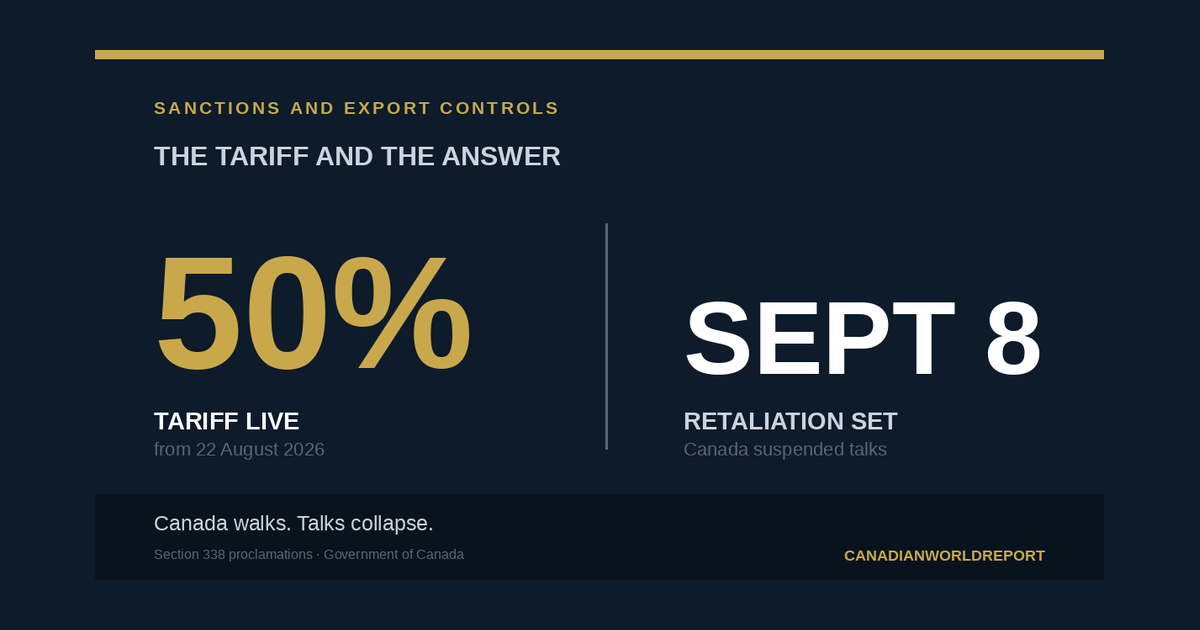
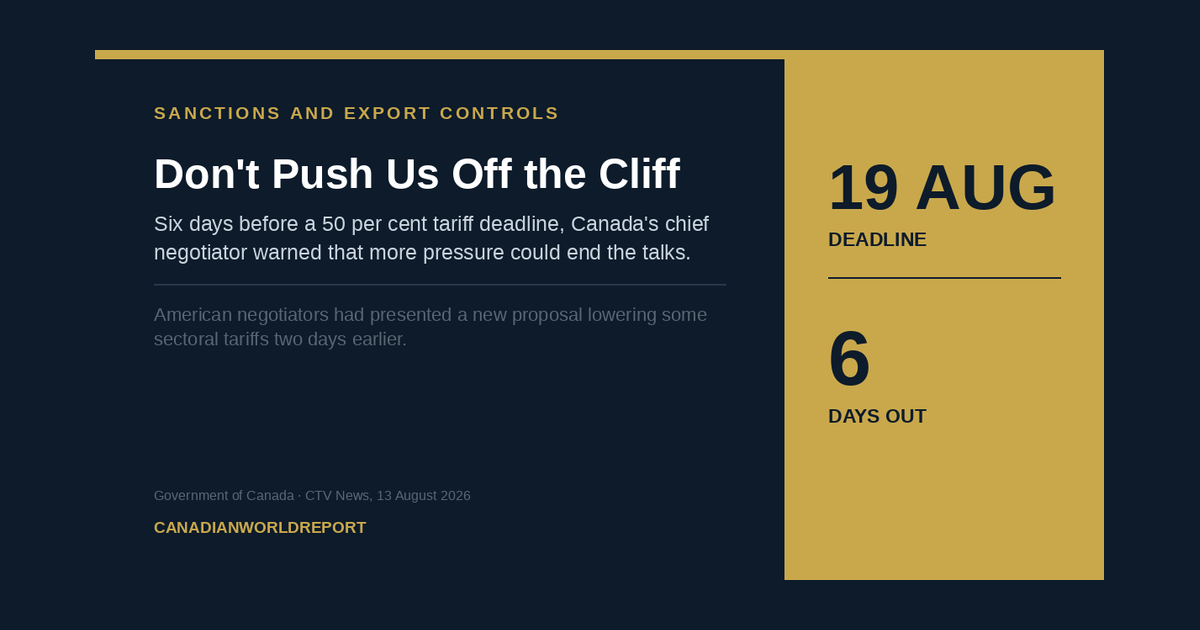
Chart showing a 50 per cent US tariff live from 22 August 2026 and Canadian retaliation set for 8 September.

Canada Walks; Talks Collapse

Canada suspended trade talks with the United States late on Friday, August 21, after Prime Minister Mark Carney said Washington’s last-hour demands touched Canadian sovereignty, the French language and the auto sector. A 50 percent U.S. tariff on a defined list of Canadian goods took effect hours later. Carney has set September 8 for dollar-for-dollar retaliation. The product list and rates are not yet published.

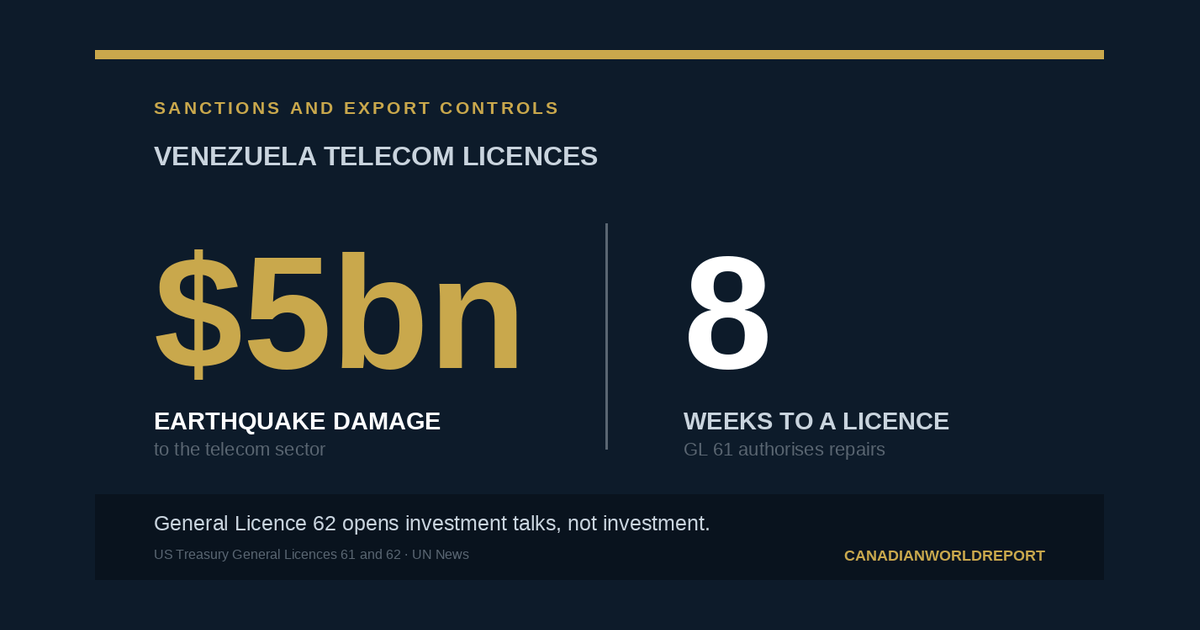
Chart showing an estimated $5 billion in earthquake damage to Venezuela's telecom sector and the eight weeks that passed before a repairs licence was issued.

US OKs Venezuela Telecom Repairs. Investment Talks Open, Not Investment.

Two licenses issued the same day let U.S. companies sell equipment and negotiate investment with Venezuela’s state telecom system, eight months after Maduro’s removal and eight weeks after an earthquake that cost the sector an estimated five billion dollars. The sourced chain stops at the wholesale authorization; no source connects it yet to a household phone or internet bill.