The Singapore-registered container ship GFS Pride sank on 14 October 2026, a day after a projectile struck it in the Strait of Hormuz. Pakistan’s National Hydrographic Office says the bulk carrier Cape Dao has gone down as well. In the week ended 12 October, crude exports through the strait averaged 8.5 million barrels a day, nearly 40 per cent below pre-war levels, according to Kpler data reported by CNBC.
The Strait Was Declared Open. The Barrels Did Not Return.
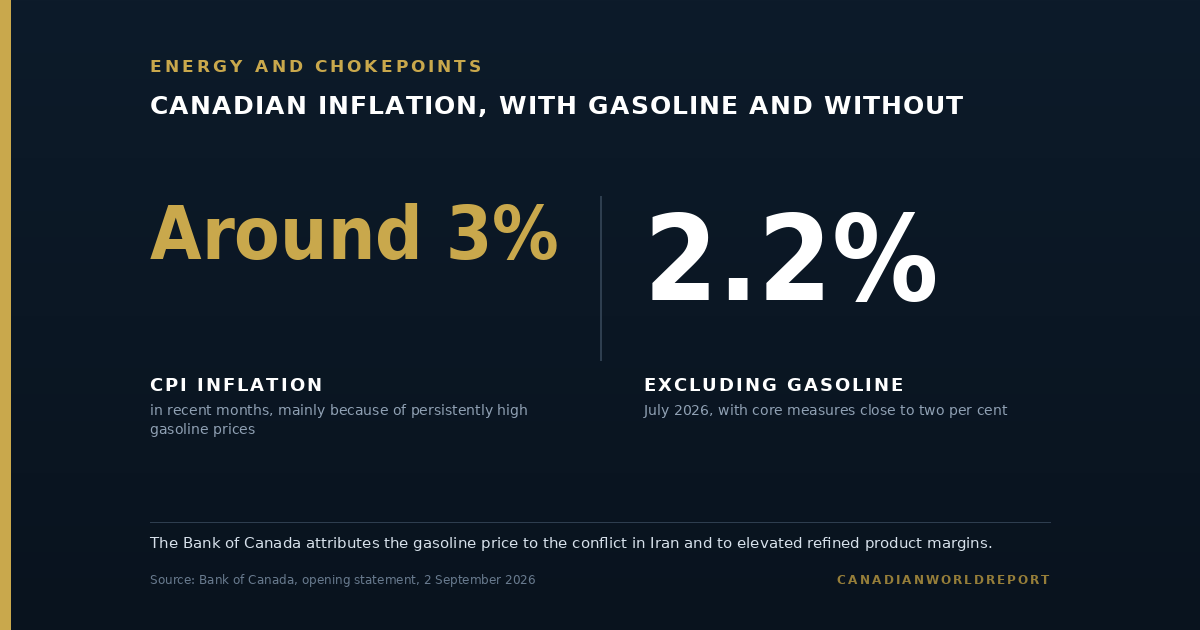
On April 8 the White House announced that Iran had agreed to reopen the Strait of Hormuz. On September 2 the Governor of the Bank of Canada told a press conference that shipments through the strait are still curtailed, that Canadian inflation is sitting at around three per cent with gasoline named as the main reason, and that stripping gasoline out leaves it at 2.2 per cent.
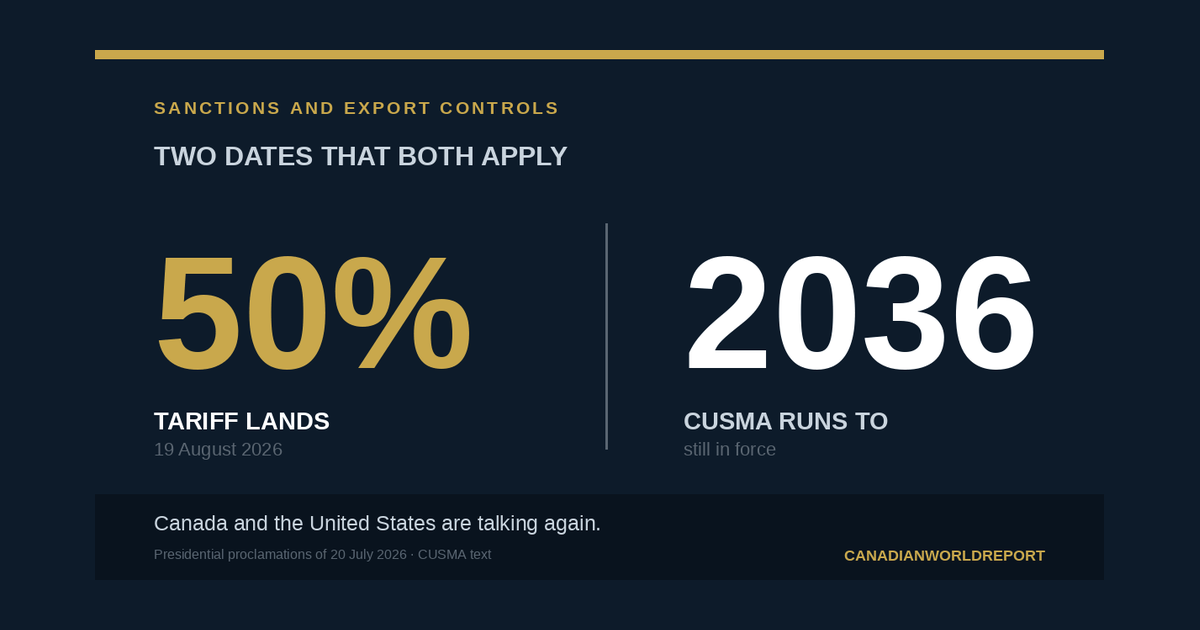
Canada and the United States are talking again. The agreement runs to 2036.
The trade agreement widely believed to have expired on 1 July is still in force, with another decade to run. Canadian negotiators have been in Washington twice in two weeks.
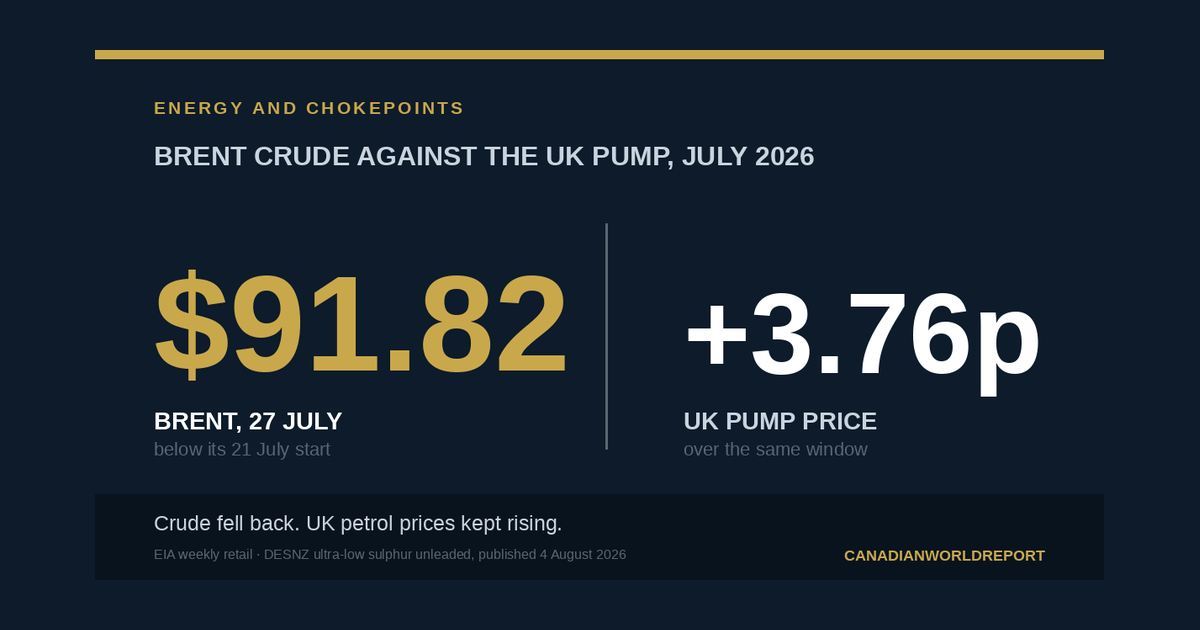
Crude fell back. UK petrol prices kept rising.
Brent rose twelve percent on 23 July and was below its starting point by the 27th. American pump prices rose, then eased. British pump prices rose, and kept going. Same barrel, same week, two different bills.
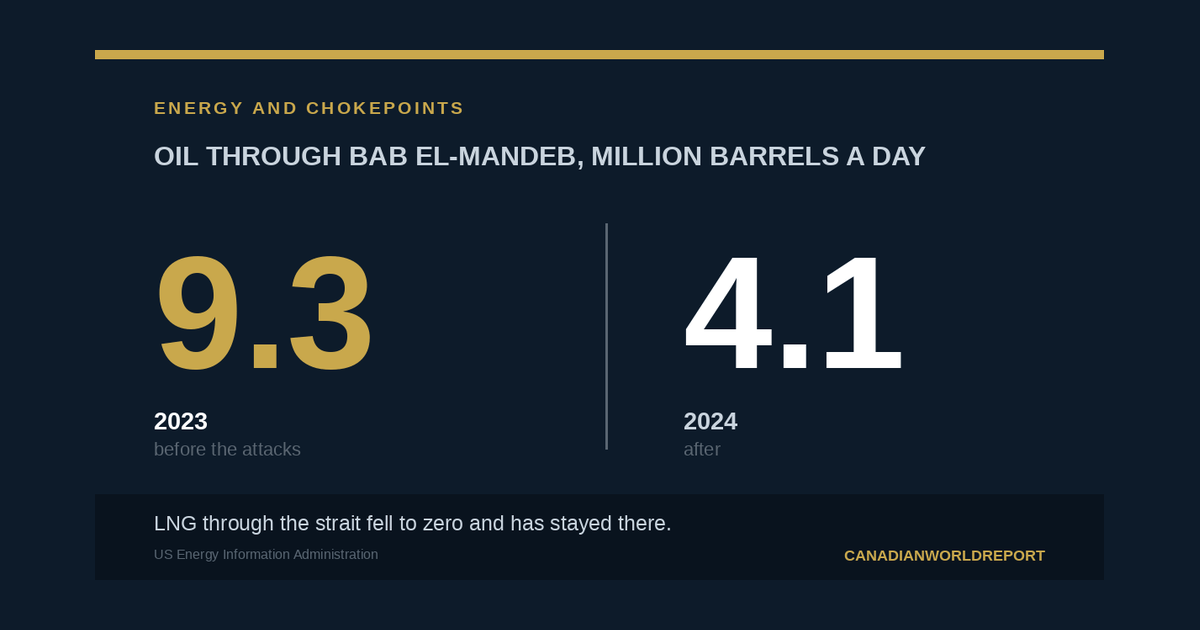
Red Sea shipping after the Houthi attacks: traffic halved, and the gas stopped
Oil flows through Bab el-Mandeb fell by more than half. Liquefied natural gas through the strait fell to zero and has stayed there. One country’s traffic barely moved, and the US Energy Information Administration says why in a single sentence.