A Canadian view of world events, and what they do to all of us.
Conflict, sanctions, energy and food security, traced from the event to the household bill. Every claim carries its label. We print every source address in full and we do not link out.
The Strait Was Declared Open. The Barrels Did Not Return.
On April 8 the White House announced that Iran had agreed to reopen the Strait of Hormuz. On September 2 the Governor of the Bank of Canada told a press conference that shipments through the strait are still curtailed, that Canadian inflation is sitting at around three per cent with gasoline named as the main reason, and that stripping gasoline out leaves it at 2.2 per cent.
On September 12 Saudi Arabia shut the 1,200 kilometre pipeline built to carry crude around that strait, after a drone strike it attributes to a launch from Iraq. The same day Houthi forces took Mayun Island, which sits in Bab al-Mandeb, the exit that the bypass route depends on.
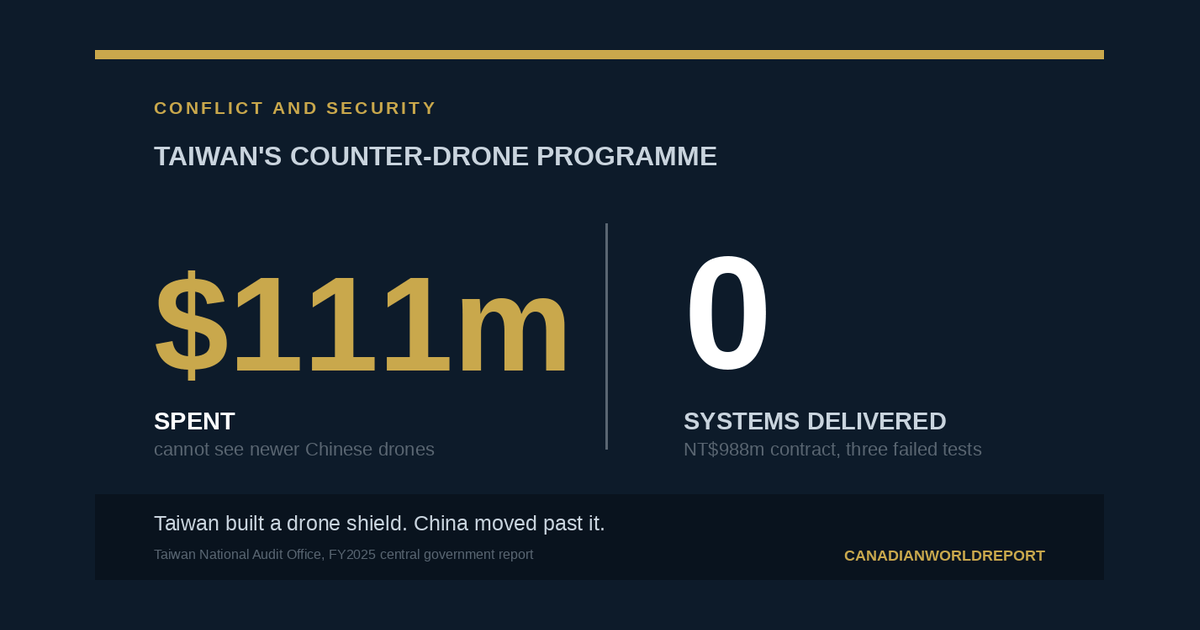
Taiwan Built a $111 Million Drone Shield. China Moved Past It.
Taiwan’s counter-drone system cannot detect the radio band, the satellite signal, or the fiber-optic links now standard on newer Chinese drones, a government audit found in July. The gap sits between two different clocks: how fast China’s drone industry moves, and how slowly Taiwan’s military can buy anything.
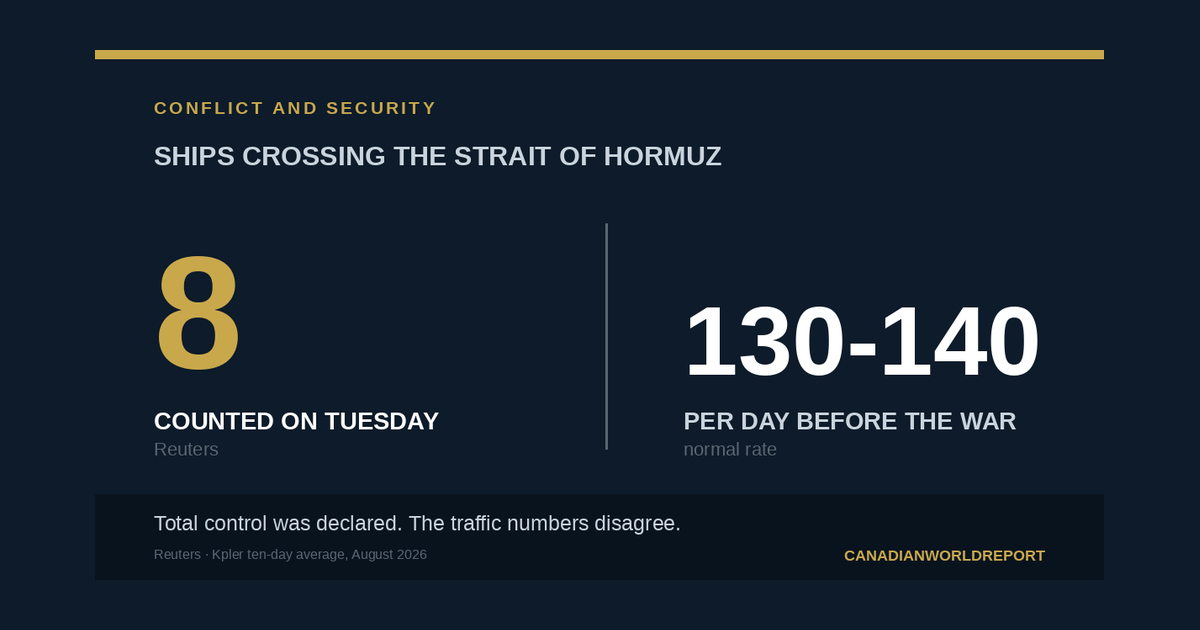
Trump Declares Total Control of the Strait of Hormuz. The Traffic Numbers Disagree.
Six months into a war neither side has won, the president has swapped threats of annihilation for a blockade he is calling a Wall of Steel. Tehran’s answer, delivered by a new set of commanders, is that nothing has changed.
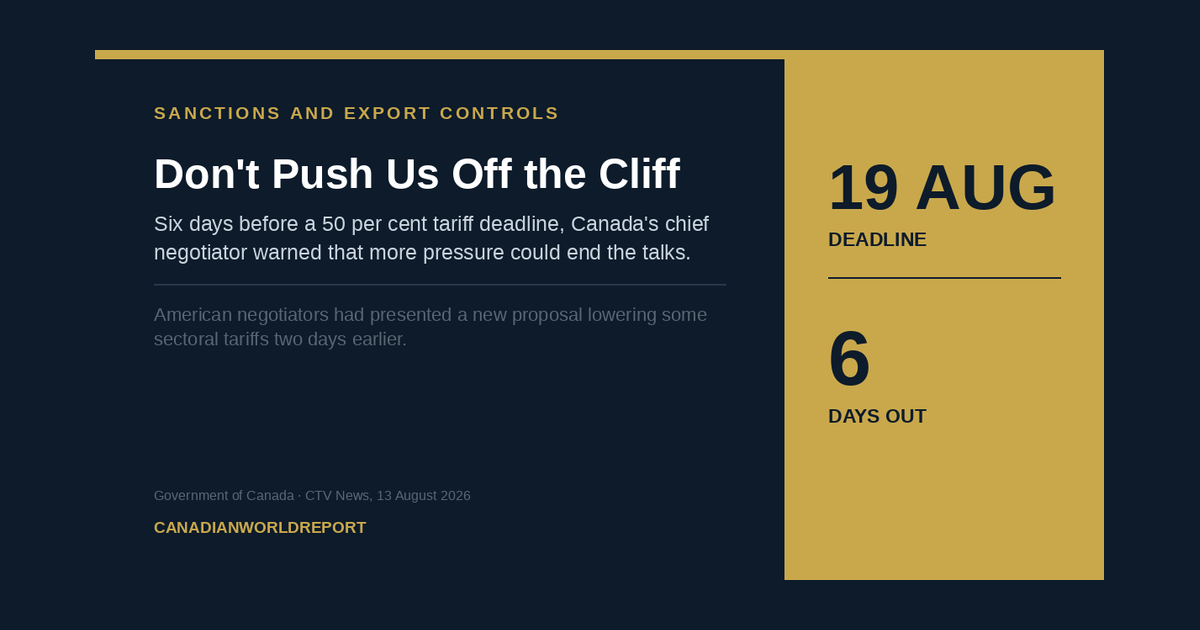
Canada Warns Washington: Don’t Push Us Off the Cliff
Six days before a 50 percent tariff is due to take effect, Canada’s chief trade negotiator has warned Washington that more pressure will not buy concessions and could end the talks meant to prevent it instead, according to sources briefed on the exchange. Washington has not said it will change course.
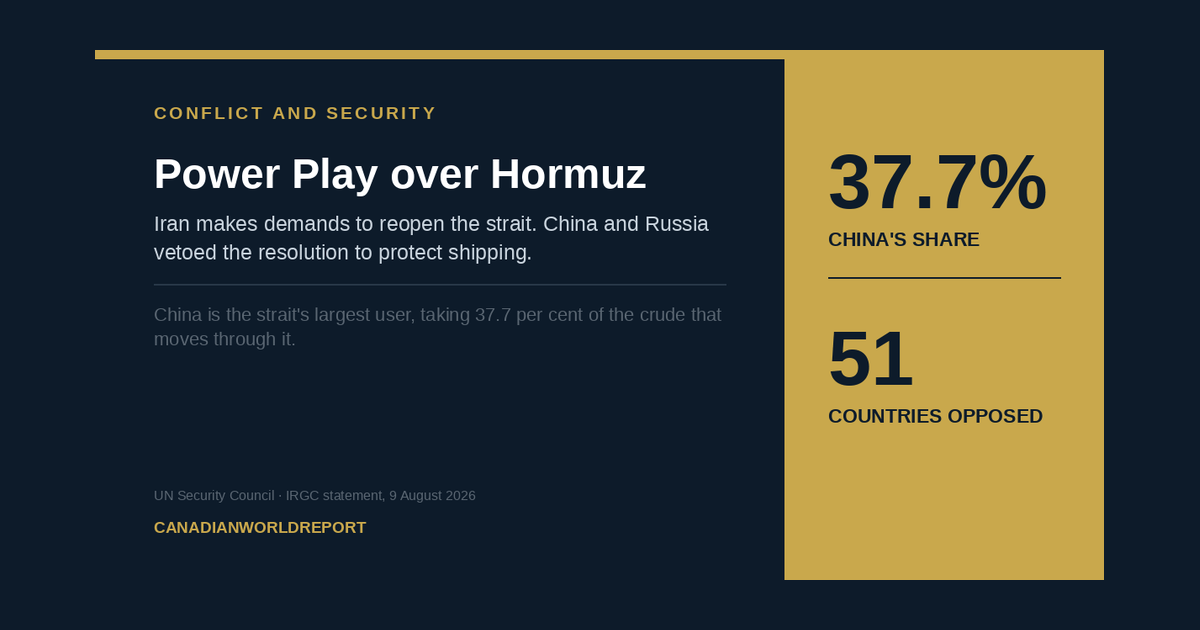
Power Play over the Strait of Hormuz
Iran is seeking transit tolls and a post-war role in the strait. Fifty-one countries and Iran’s own June memorandum ruled that out. China is the strait’s largest user at 37.7 percent and vetoed the Security Council resolution to protect its own shipping.
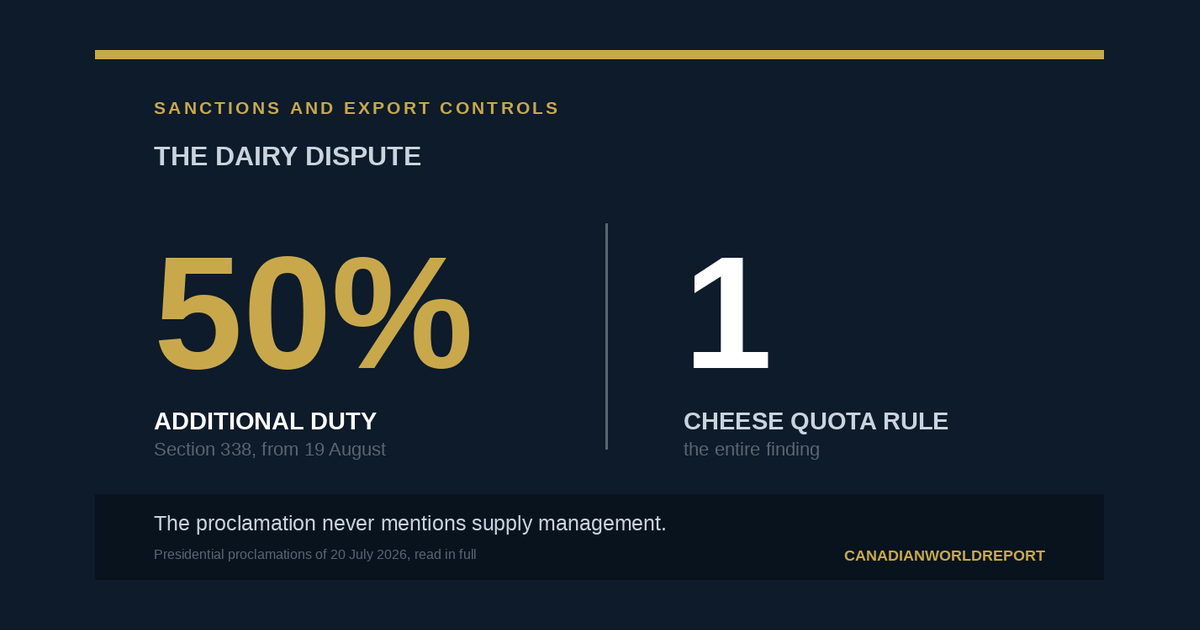
The dairy dispute comes down to who is allowed to hold a cheese licence
The proclamation that names dairy runs to nine numbered findings and does not mention supply management once. What it objects to is a single eligibility rule deciding which Canadian businesses may use a cheese quota.
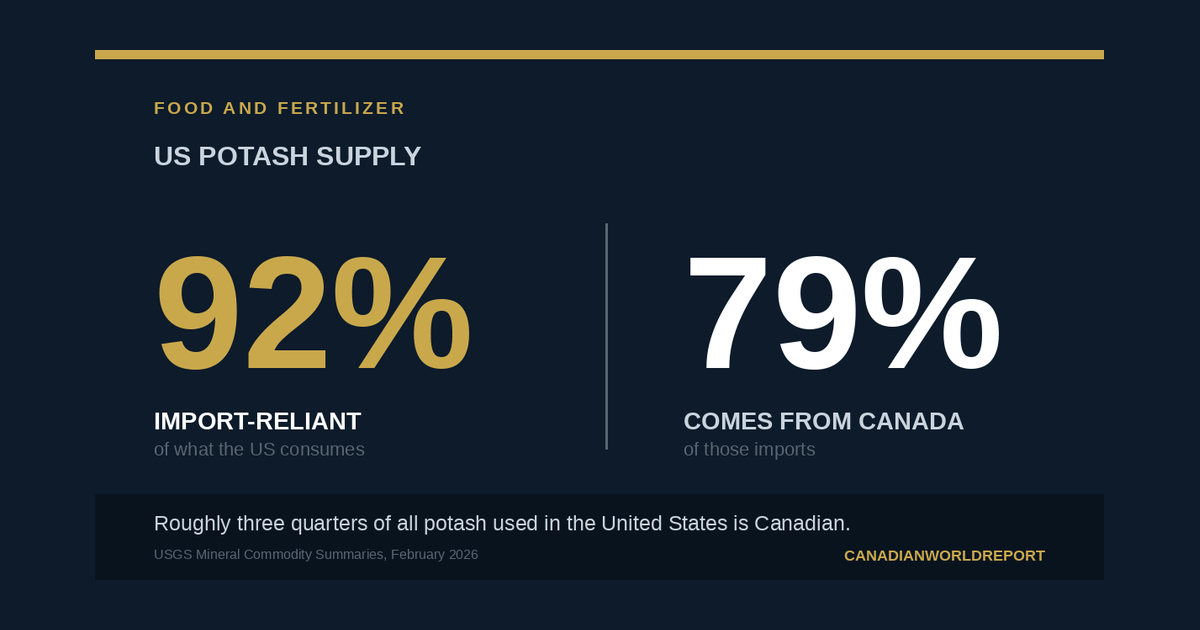
American farms run on Canadian potash. In November it was made a critical mineral.
The United States is 92 percent reliant on imported potash and Canada supplies 79 percent of those imports. Potash was added to the US critical minerals list on 7 November 2025, and is not among the first reference prices.
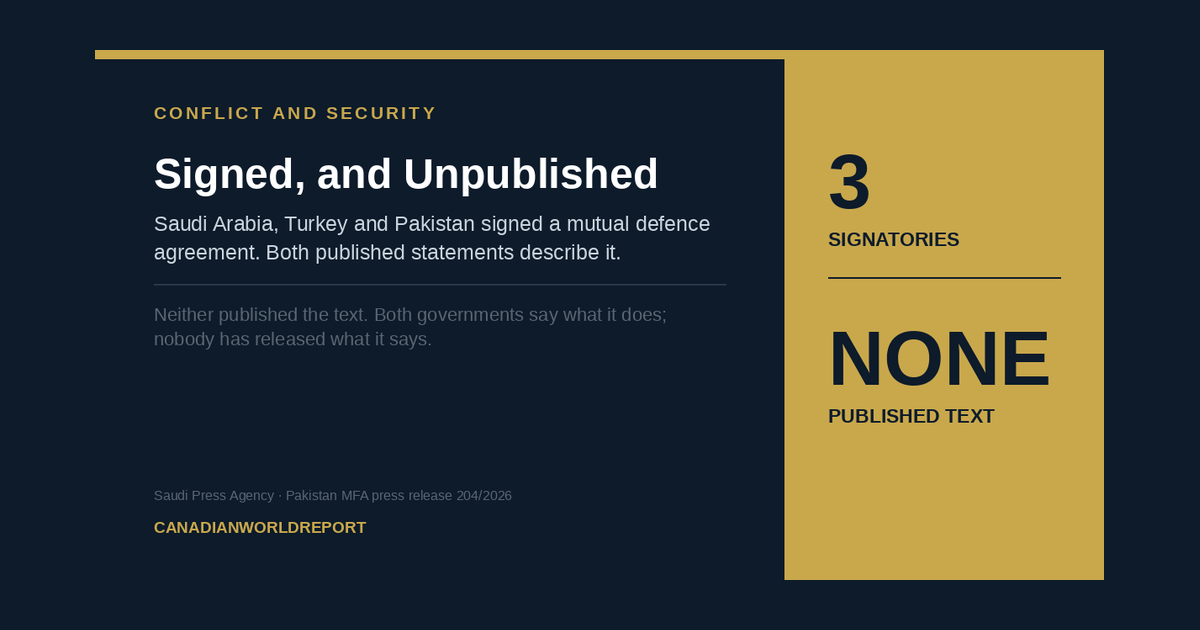
Three leaders signed a mutual defence agreement. Nobody has published it.
Saudi Arabia, Turkey and Pakistan signed the Makkah Joint Defence Agreement at Al-Safa Palace. Two of the three governments published an identical four-paragraph statement. That statement is not the agreement, and the agreement has not been released.
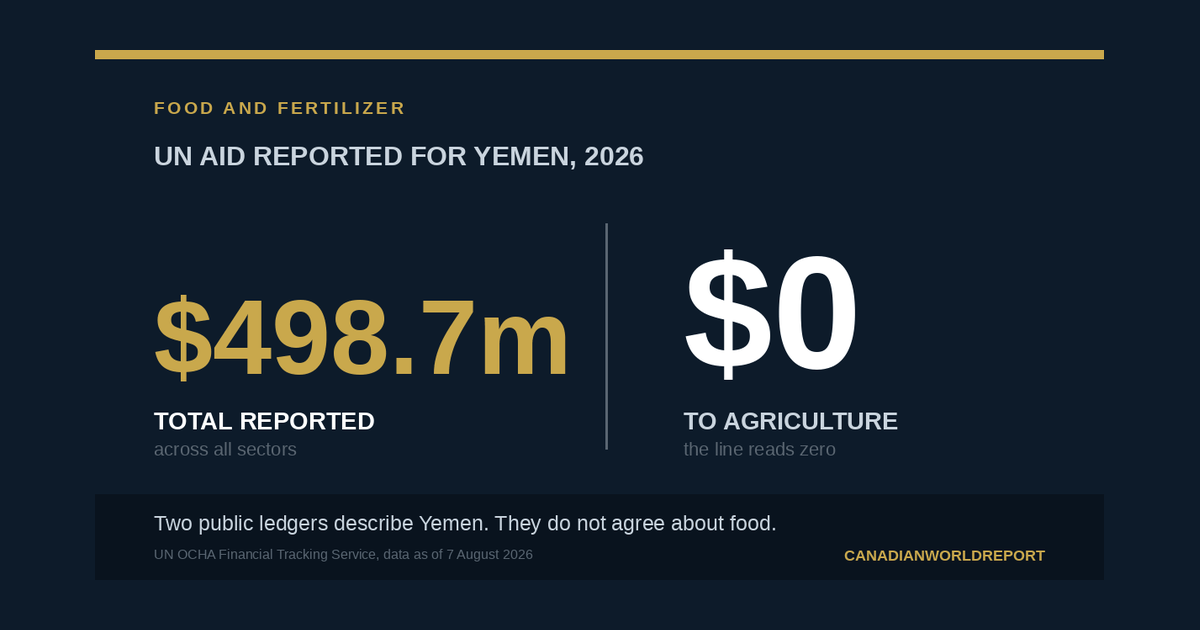
The UN aid ledger for Yemen has a line for agriculture. It reads zero.
The UN Financial Tracking Service records US$498,650,826 reported for Yemen so far this year. Food Security has US$94,837,390 of it. Agriculture has nothing at all, and the hunger assessment behind those figures no longer covers roughly two thirds of Yemenis.
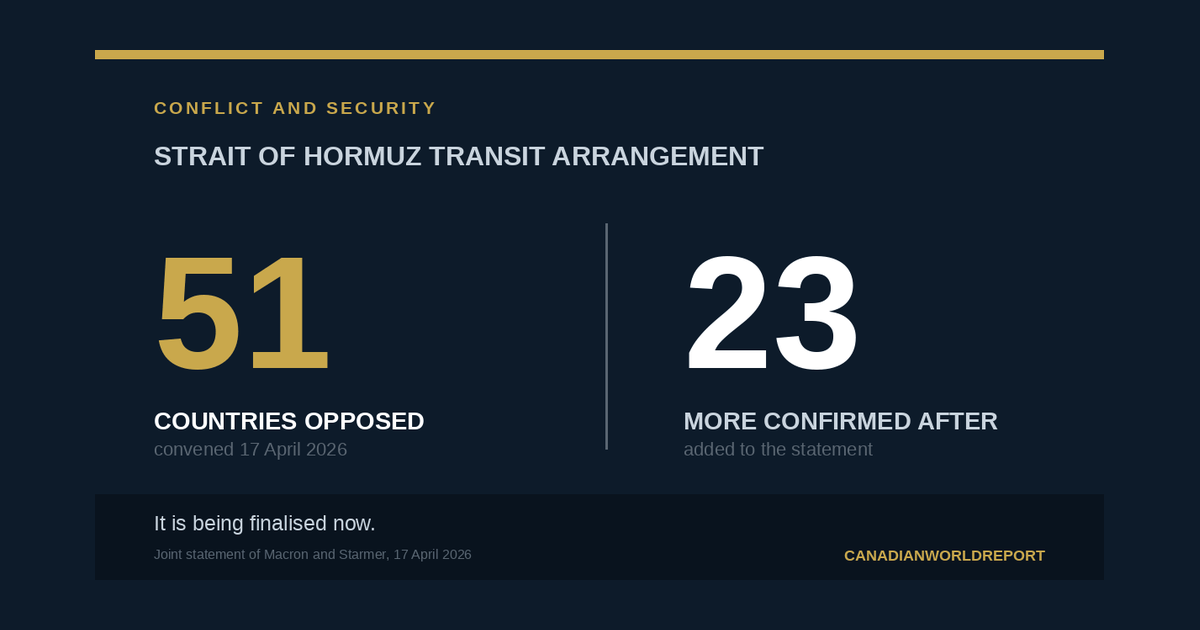
Fifty-one countries said they opposed this arrangement in April. It is being finalised.
A Strait of Hormuz transit arrangement between Iran and Oman is in final drafting, and under it large parts of the shipping route run through Iranian territorial waters. In April, France and the United Kingdom convened 51 countries who stated their opposition to any agreement regime amounting to a de-facto privatisation of the strait. The multinational mission announced at that summit has not sailed, and the statement announcing it explains why.
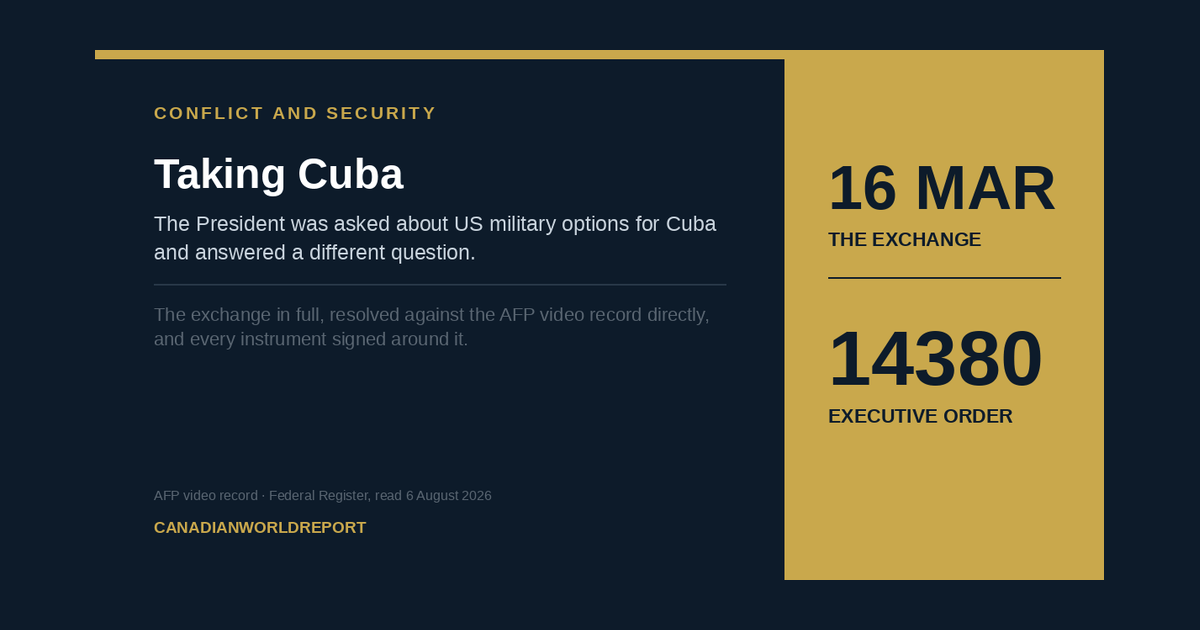
Taking Cuba: one sentence in March, and the record around it
On 16 March 2026, in the Oval Office, the President of the United States was asked what he would do to Cuba with the military. He declined that question and answered a different one. This is what he said, in full.
How to read this page
How we verify
Every material claim is checked against a wire service or a primary document before it is written. Where the primary source is reachable we use the primary source. Unlabelled claims are not published.
What we refuse to cover
Domestic politics, elections, culture war, personalities. Not because they do not matter, but because covering them would destroy the non-aligned position that makes everything else credible.
Why no links out
Every source address is printed in full at the foot of each piece, in a box that selects on one click. Verifiable and clickable are not the same thing. You can check us without being invited to wander off.