A Canadian view of world events, and what they do to all of us.
Conflict, sanctions, energy and food security, traced from the event to the household bill. Every claim carries its label. We print every source address in full and we do not link out.
The Strait Was Declared Open. The Barrels Did Not Return.
On April 8 the White House announced that Iran had agreed to reopen the Strait of Hormuz. On September 2 the Governor of the Bank of Canada told a press conference that shipments through the strait are still curtailed, that Canadian inflation is sitting at around three per cent with gasoline named as the main reason, and that stripping gasoline out leaves it at 2.2 per cent.
On September 12 Saudi Arabia shut the 1,200 kilometre pipeline built to carry crude around that strait, after a drone strike it attributes to a launch from Iraq. The same day Houthi forces took Mayun Island, which sits in Bab al-Mandeb, the exit that the bypass route depends on.
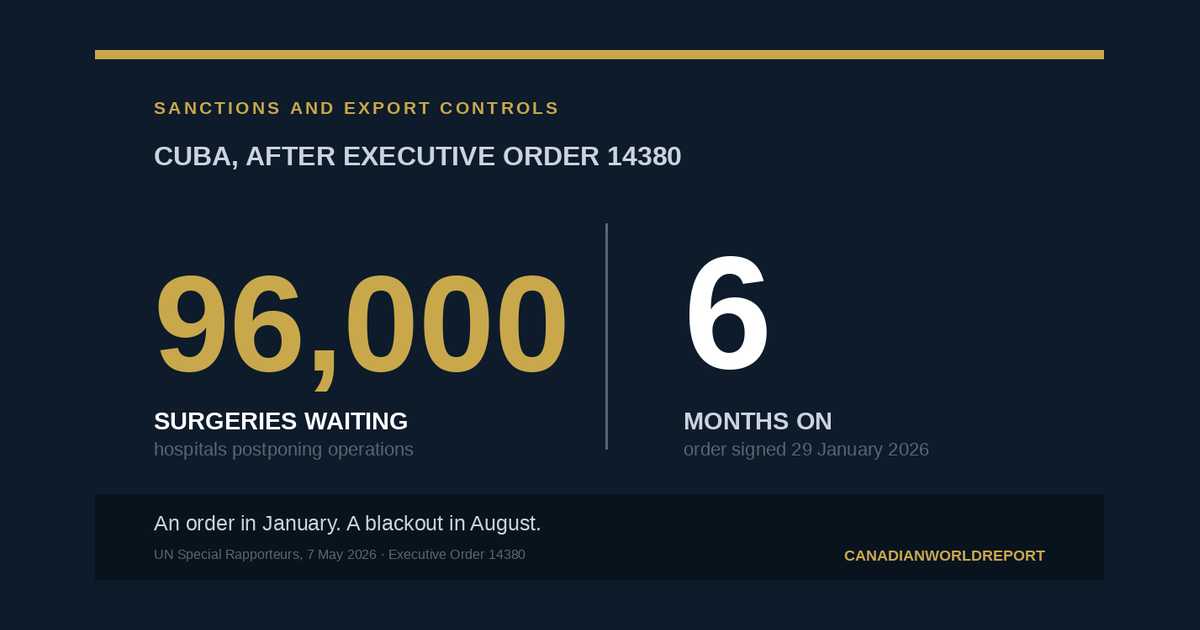
An order in January, a blackout in August, 96,000 surgeries waiting
On 29 January 2026 the United States signed an order making the supply of oil to Cuba cost a third country its access to the American market. Six months later the island’s hospitals are postponing operations and the United Nations calls it energy starvation.
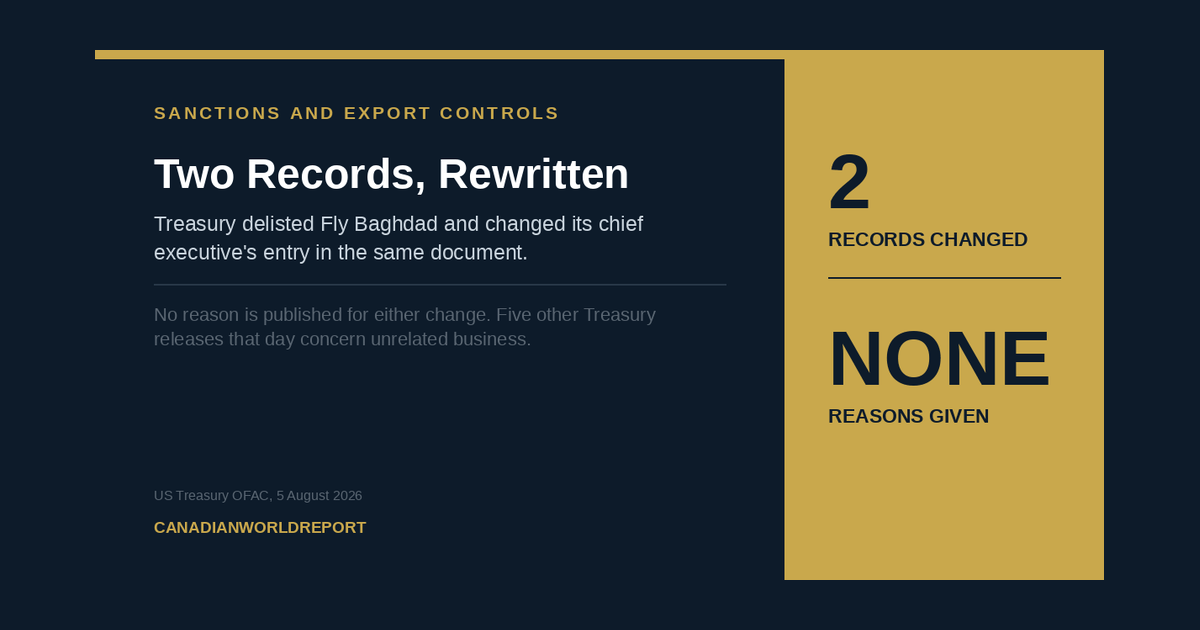
Treasury rewrote the record on sanctioned people twice in two days, and explained neither
On 5 August 2026 the US Treasury lifted the Fly Baghdad sanctions and, in the same document, changed the Iraqi airline chief executive’s entry so that it no longer rested on the airline. Nothing in the published record says why.
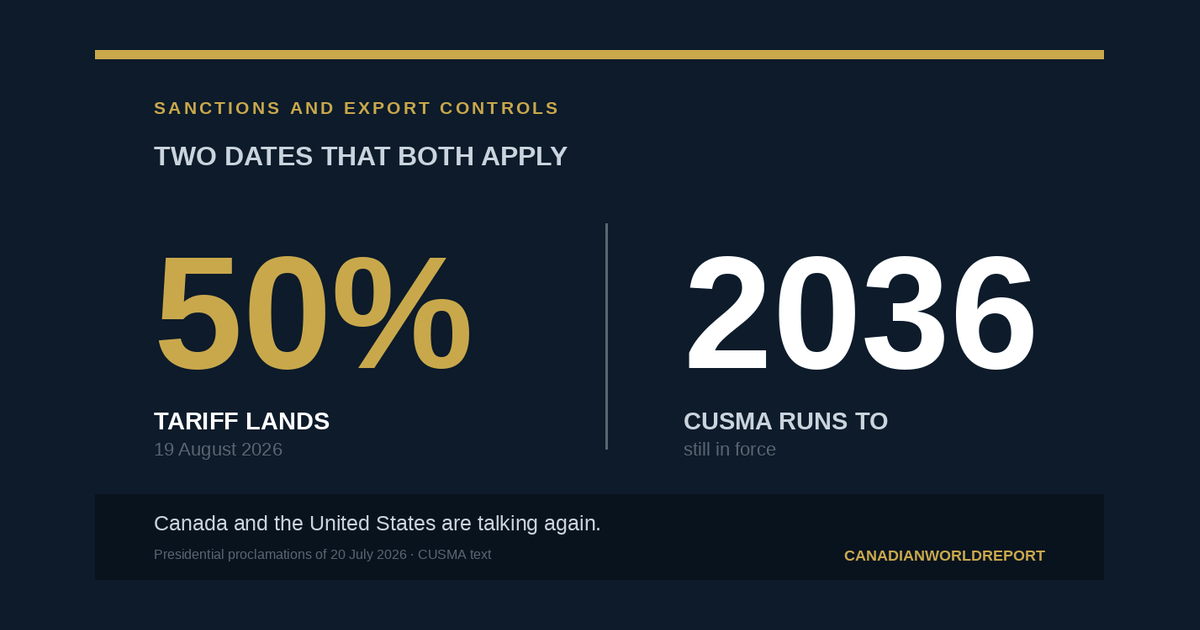
Canada and the United States are talking again. The agreement runs to 2036.
The trade agreement widely believed to have expired on 1 July is still in force, with another decade to run. Canadian negotiators have been in Washington twice in two weeks.
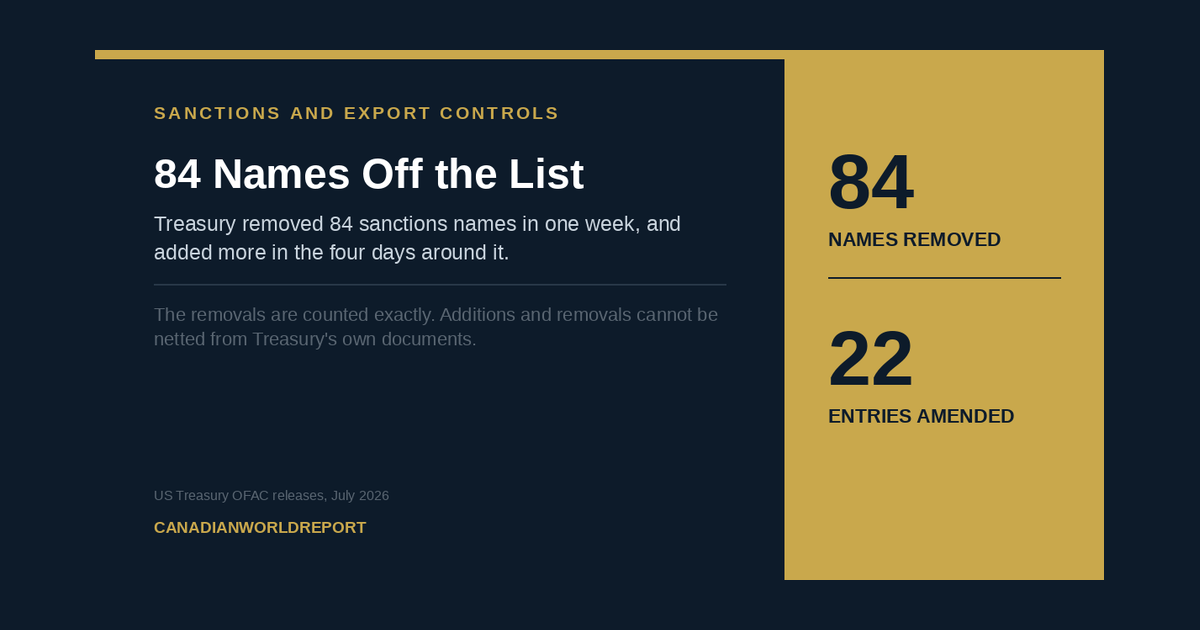
Treasury took 84 names off the sanctions list in one week, and added more in the four days around it
The removals are counted exactly. The additions cannot be totalled from the same documents without guessing. Anyone who nets the two figures against each other is publishing a number that does not exist, and the reason is in Treasury’s own text.
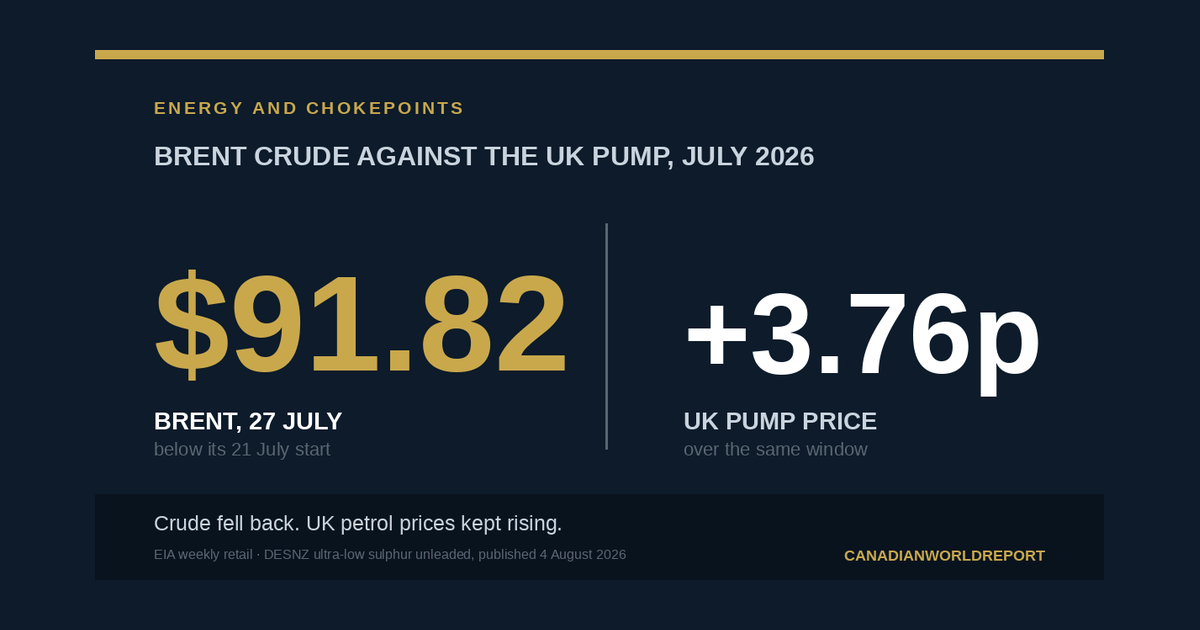
Crude fell back. UK petrol prices kept rising.
Brent rose twelve percent on 23 July and was below its starting point by the 27th. American pump prices rose, then eased. British pump prices rose, and kept going. Same barrel, same week, two different bills.
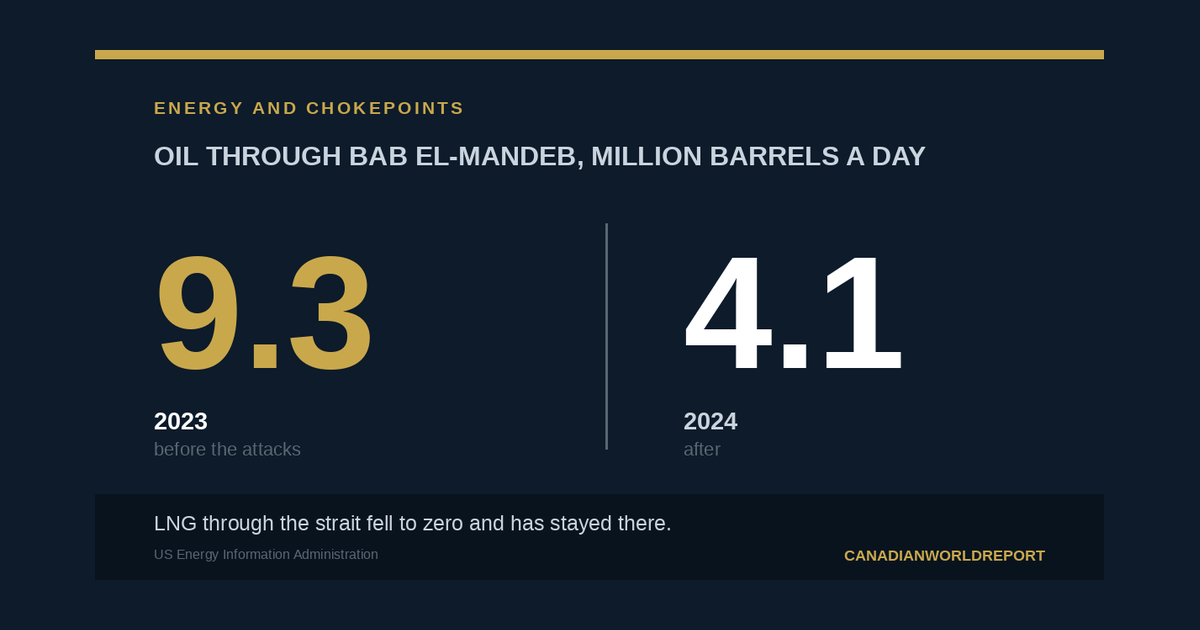
Red Sea shipping after the Houthi attacks: traffic halved, and the gas stopped
Oil flows through Bab el-Mandeb fell by more than half. Liquefied natural gas through the strait fell to zero and has stayed there. One country’s traffic barely moved, and the US Energy Information Administration says why in a single sentence.
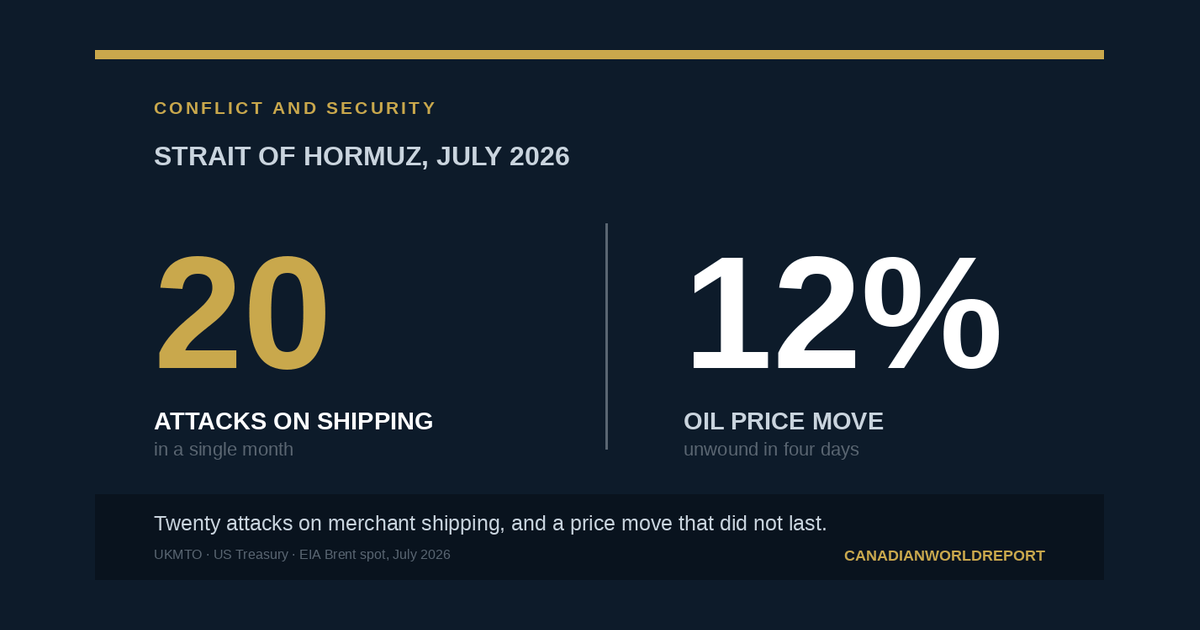
Strait of Hormuz attacks and the oil price, July 2026
Twenty attacks on merchant shipping. One US Treasury designation. A twelve percent move in the world oil price that had completely unwound four days later. Here is what each record says, and the point at which the evidence runs out.
How to read this page
How we verify
Every material claim is checked against a wire service or a primary document before it is written. Where the primary source is reachable we use the primary source. Unlabelled claims are not published.
What we refuse to cover
Domestic politics, elections, culture war, personalities. Not because they do not matter, but because covering them would destroy the non-aligned position that makes everything else credible.
Why no links out
Every source address is printed in full at the foot of each piece, in a box that selects on one click. Verifiable and clickable are not the same thing. You can check us without being invited to wander off.